Why Forward-Thinking Cities Are Installing Robotic Recycling Hubs in Coffee Shops (And How Austin Can Lead)
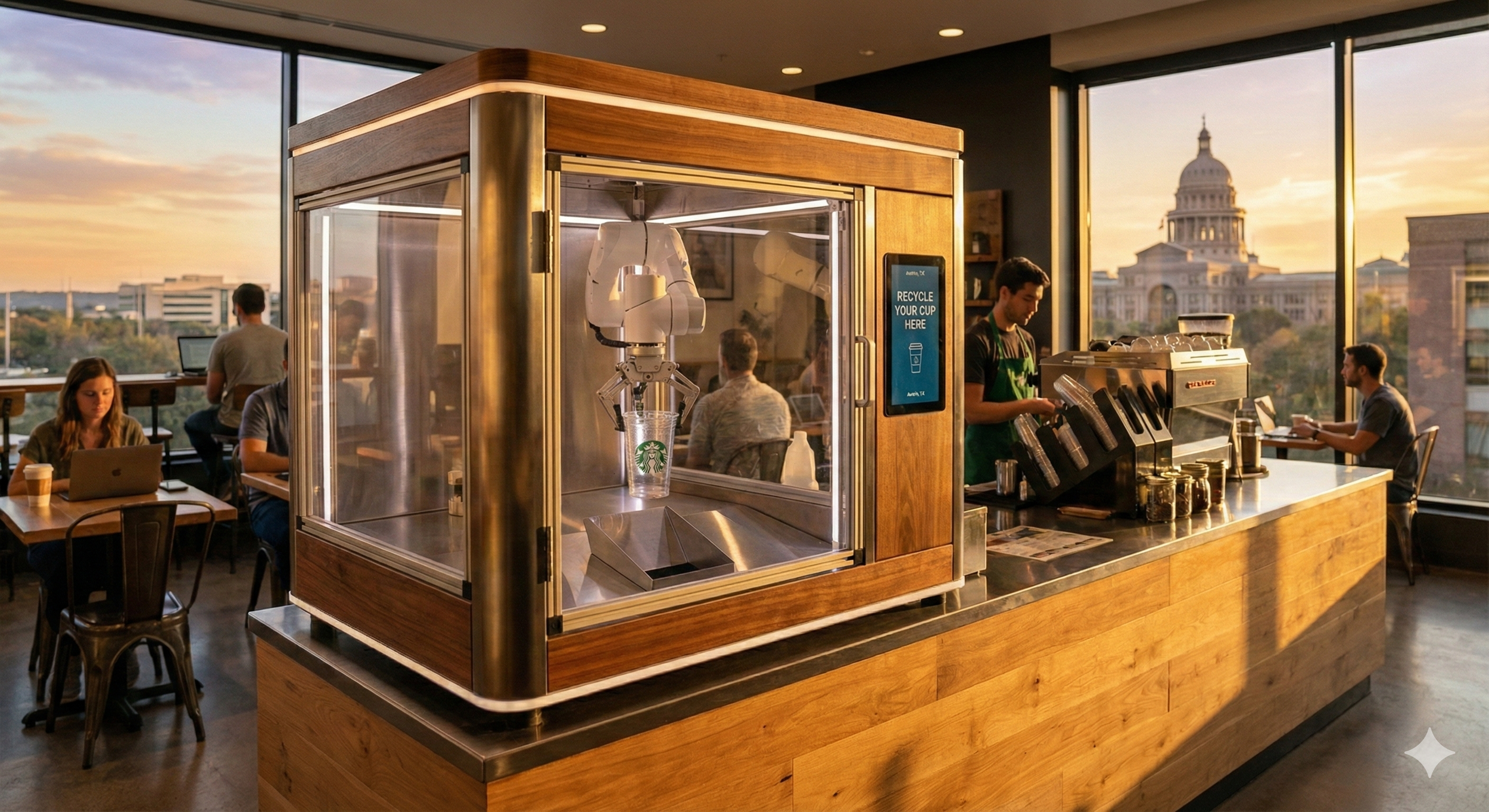
Robotic recycling hubs in high-traffic spots like coffee shops boost diversion rates by 30-60%, capturing clean PP cups at source to fuel circular systems. Singapore's NEA program, for example, achieved 89% participation via incentivized RVMs, recovering 3.2 kg of PP weekly per unit.
Educational value: These hubs use AI vision for contamination detection, integrating with venue POS for seamless rewards. Amsterdam's 2025 circular economy report notes 41% cup recovery in pilot cafés through robotic sorting, reducing landfill plastics by 180 tons/year city-wide.
Real-world case: Seattle's Recology MRF deployed Glacier's AI robotics in 2025, auditing bale composition to cut contamination by 20% in food-service streams, including coffee cups—proving ROI via higher resale values.
In Japan, a 2024 sorting robot study automated beverage container pretreatment, handling mixed PP/PET with 95% accuracy despite stacking issues.
Austin's tech-savvy café scene positions it ideally, with the 2025 Zero Waste Plan enabling pilots for 90% diversion.
Startups can draw from UN-Habitat's Lebanon RVM distribution, which integrated 11 units into social spaces for 25% uptake gains.
Benefits for commercialization:
Engagement: Digital rewards (e.g., loyalty points) drive organic social sharing, per Singapore's model.
Metrics: 85-95% recovery in DRS networks vs. 30-50% traditional
PR/ESG: Venues gain visibility, as in Ella's Singapore robotic barista sustainability pillar.
Austin's Circular Austin Accelerator supports such innovations—explore for your hub concept.
Further Reading