From Trash to Treasure: How Plasticrete Turns Your Discarded Coffee Cups into Bulletproof Building Blocks
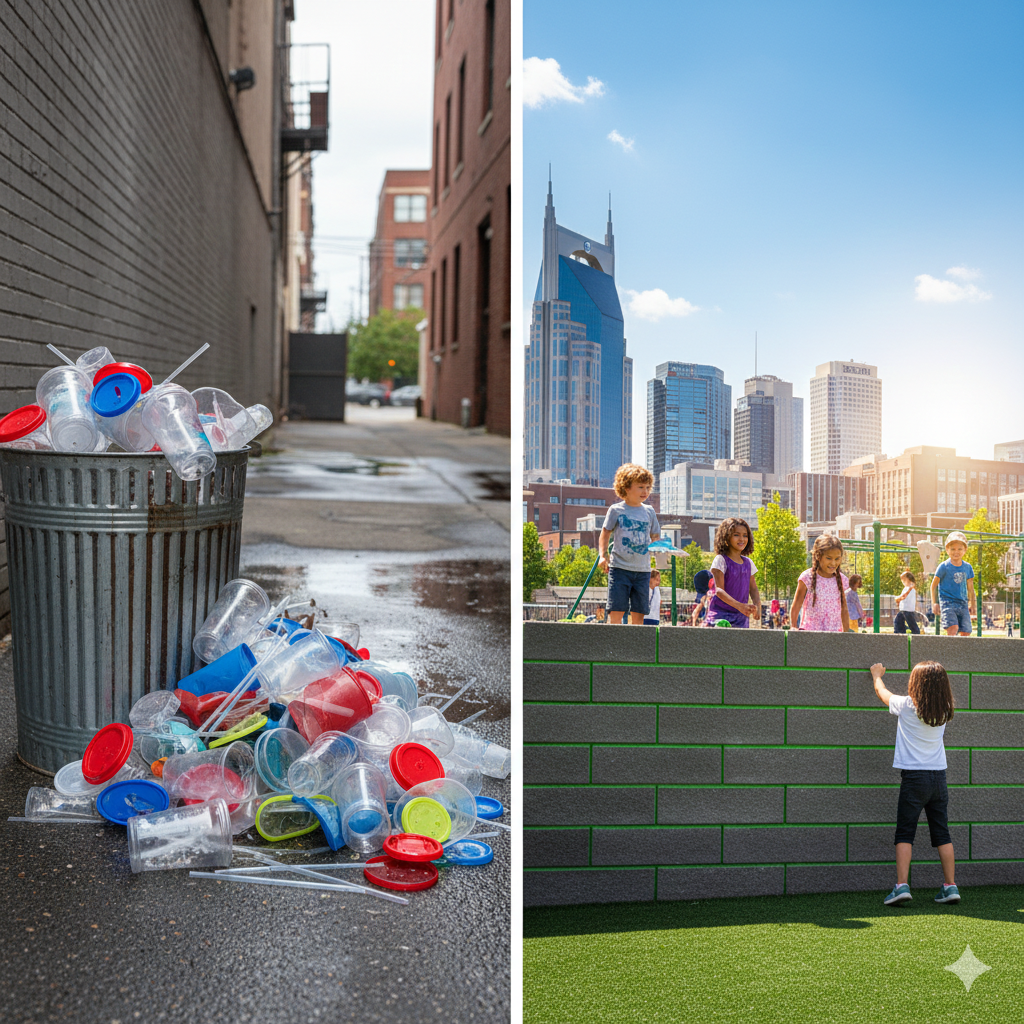
That crumpled PP cold cup from your morning Starbucks run? Right now, it's probably en route to a landfill, destined to linger for centuries while shedding microplastics into our soil and seas. But what if instead, it became part of a sturdy park bench, a community center wall, or even affordable housing? Enter Plasticrete—a Nashville-based innovator that's cracking the code on plastic waste by transforming it into high-performance building materials. No greenwashing, just gritty, real-world recycling that could redefine how we handle the 500 billion single-use cups we toss yearly.
Plasticrete's mission is refreshingly straightforward: fulfill the long-broken promise of plastic recycling. For decades, we've been told to "reduce, reuse, recycle," yet only about 9% of plastics ever get reborn. Plasticrete steps in by accepting the vast majority of household plastics—think those non-recyclable #3, #6, and #7 items that contaminate curbside bins—and converting them into a composite material that's as tough as traditional concrete but far kinder to the planet. Founded in the heart of Tennessee, they're not just talking sustainability; they're building it, one recycled cup at a time.
The magic happens through a clever, low-energy process that sidesteps the pitfalls of conventional recycling. First, collected plastics (sourced from residents, businesses, and waste streams across the U.S.) are sorted and shredded into uniform flakes—no fancy high-tech sorters needed, keeping costs down and accessibility up. These flakes are then mixed with industrial byproducts like fly ash or slag, heated at relatively low temperatures (avoiding the massive energy suck of melting virgin plastics), and molded into blocks or panels. The result? A lightweight, fire-resistant, and insulating building material that boasts compressive strength rivaling concrete—up to 5,000 PSI—without the carbon-heavy cement production.
Why does this matter for single-use cup addicts like us? Those clear PP cups, along with lids, straws, and takeout containers, make up a huge chunk of the 40 million tons of U.S. plastic waste annually. Traditional recycling rejects them due to contamination or type, but Plasticrete embraces the mess. By diverting this waste, they slash landfill methane emissions (a GHG 25 times more potent than CO2) and cut the demand for new fossil-fuel-derived plastics, which guzzle 99 million tons of oil yearly. Early pilots show Plasticrete blocks insulating 30% better than standard concrete, potentially saving builders 20% on energy costs for new structures. Imagine eco-parks built from café discards or disaster-relief shelters from festival trash—it's already happening in Nashville test sites.
Of course, scaling this isn't without hurdles. Collection logistics remain a beast, and consumer education is key to boosting drop-off rates. But Plasticrete's edge lies in its "no-compromise" ethos: their material doesn't sacrifice durability for eco-cred. As one team member puts it, "We accept the vast majority of plastics thrown away by residents across the USA, and turn it into a building material that compromises nothing." Partnerships with local haulers and cities are ramping up, and with federal incentives like the Inflation Reduction Act funneling billions into circular economy tech, expansion feels imminent.
The ripple effect? For coffee chains like Starbucks, chasing their 2030 recycled-content goals, solutions like Plasticrete could close the loop on cup waste. And for you? Start small: rinse and drop your used cups at a Plasticrete partner site (check their map for pop-ups). Or advocate—email your mayor about municipal collections.
In a world drowning in disposables, Plasticrete isn't just recycling; it's reimagining. Next time you sip that iced latte, picture your cup as a cornerstone of tomorrow's playground. Sustainable building starts with what we throw away.
Sources