From Cup to Crisis: How Single-Use Plastics Fuel Microplastic Mayhem in Your Morning Brew
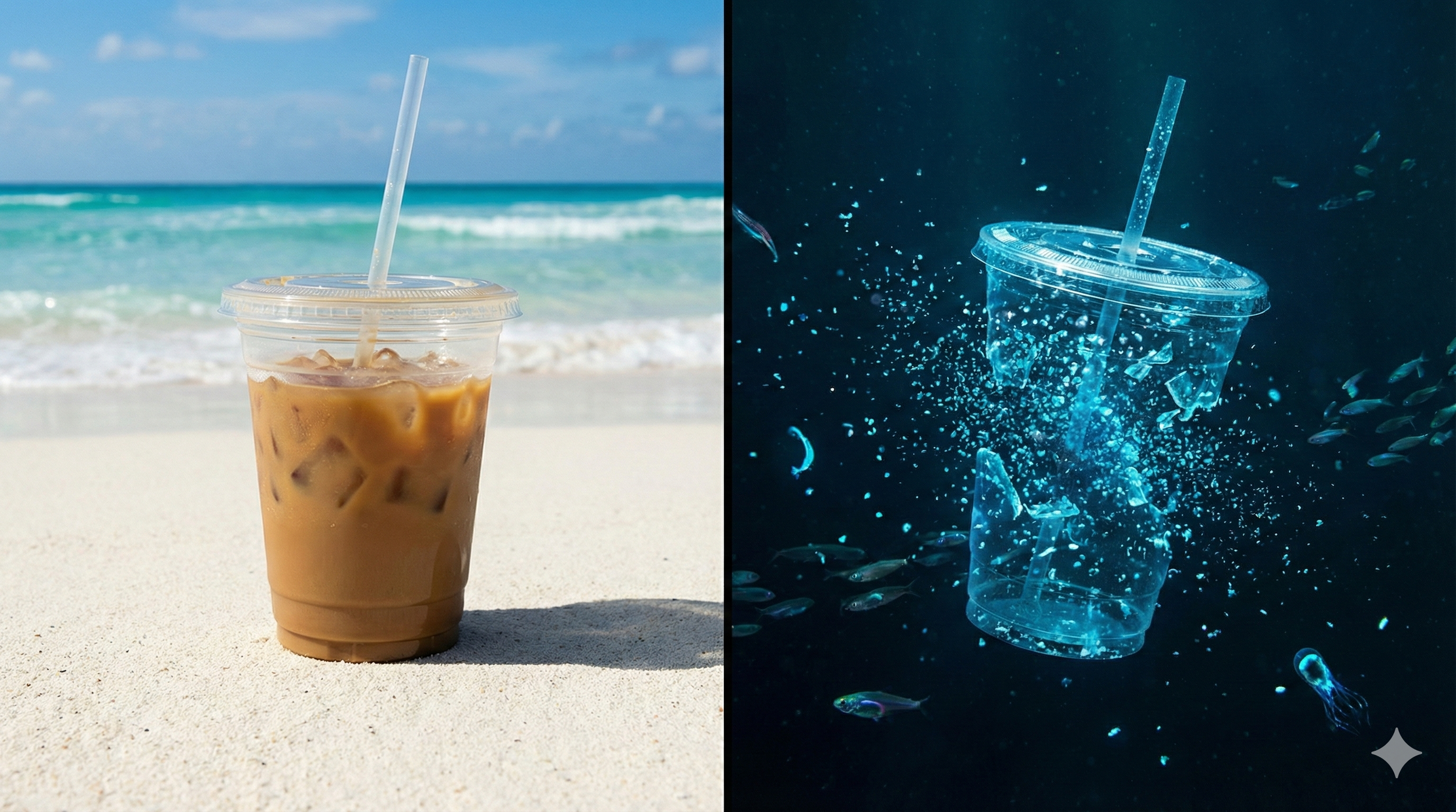
That clear plastic iced-coffee cup you just tossed into the bin? In less than a year, pieces of it could be swimming inside a fish, floating in the Pacific Garbage Patch, or—according to studies published in 2022 and 2023—circulating in human blood and breast milk.
The numbers are brutal. Roughly 500 billion single-use cups are discarded globally every year. Most cold-drink cups from big chains are made of polypropylene (PP #5). Under sunlight, heat, and wave action, PP doesn’t biodegrade; it photo-degrades, shattering into microplastics smaller than 5 mm in just months. Those fragments never go away.
A 2022 study in Science Advances found microplastics in 80 % of human blood samples tested across 22 people. Another 2023 paper detected them in human breast milk for the first time. Even brewed coffee isn’t safe: researchers in 2022 poured hot water through common plastic-lined paper cups and found thousands of microplastic particles leaching into the drink within 15 minutes.
These particles act like tiny sponges, soaking up heavy metals and persistent organic pollutants. When fish eat them and we eat the fish—or drink water filtered through contaminated rivers—the toxins climb the food chain straight to us.
The good news? You can stop being part of the pipeline today.
Switch to borosilicate glass or uncoated stainless steel (zero plastic contact).
Use a silicone or cork sleeve instead of plastic lids.
Keep a collapsible cup in your bag—most pay for themselves in 15–20 drinks.
Take the 30-day No-Single-Use-Cup Challenge this month. Snap a pic of your reusable in action and tag it #30DaysNoDisposables. The planet—and your bloodstream—will thank you.
Sources
https://www.science.org/doi/10.1126/sciadv.abq1255